Friday, August 31, 2007

MORE BIKE TRAIL ADVENTURES


(News-Herald, August 30) One of my goals this summer was experience the full range of available bike trails in Venangoland.

Of course, I’ve trekked the civilization-heavy pedal path from Franklin to Oil City many times. More rustic is the stretch south from Franklin to the Belmar bridge. From there you can head out the Sandycreek trail, complete with several cool old railroad bridges, and a gentle uphill slope that doesn’t intimidate when you’re headed up, but provides gentle encouragement on the way back.

It’s worth crossing the Belmar bridge now because there’s another path spur from Belmar down to Fisherman’s Cove. This allows for a nice round trip bike and kayak biathlon if you’re feeling really ambitious.

But last week I finally completed the big bike aspiration I had for this summer. I pedaled all the way to Emlenton.

I’ve been tempted for a long time. When I head south, I’m always subject to Trail Suck, that powerful force that gets in your head and whispers, “Oh, just a little bit more…” and sucks you farther on down the trail. So I waited for a day when my daughter could come fetch me on the far end, and off I went.

There are plenty of great features on the Emlenton run. Of course, there’s Indian God Rock, a monument to centuries of multi-cultural graffiti. Down below Brandon, the trail stops for a bit—turn left up the hill and follow the dirt road through a village. Eventually you’ll arrive at Kent Road, which wins the award for the most generous interpretation of the word “road” ever. If your dream is to ride all the way to Emlenton without ever getting off your bike, this is where your dream dies.

But once you’re back on the trail the journey just gets better and better. There’s the Kennerdell tunnel, for which you must have some kind of light. Really. Turn off all the lights in your house at midnight, sit in the basement, put three garbage bags over your head and duct tape your eyelids shut. The Kennerdell tunnel is darker than that. It’s like riding a bicycle through the black of space; pedaling can become awkward because you lose the sense of where the ground is. My flashlight was too wimpy; don’t even ask how I carried it.

Once you emerge, there are more miles of forest and river, plenty of opportunity to enjoy being away from Stuff. In the auto age houses and stores and way stations grow up around routes, so that the road gives us continuous civilization, occasionally punctuated by bits of nature, like occasional mini-parks. But railways show a world mostly of undeveloped nature, occasionally interrupted by towns and villages. Train travel must have created a sense of small isolated outposts of humanity in a vast sea of forest, hill, and river.

The second tunnel en route is mercifully short—almost as soon as you’ve entered, a light smudge at the far end becomes comfortably visible.

Your first hint that you’ve arrived in Emlenton is a landscape of ruined foundations. As steeped in Venangoland history as I am, I am woefully undersoaked in Emlentonia; it took research to identify this as oil refinery remains. Pass a parking lot (the nicest one anywhere on the trail network) and you’re on the main drag of Emlenton.

Emlenton isn’t hard to explore, although there is directory signage that only faces one of three entryways to town, and is not really readable from a car, anyway. At one end of the town is the Emlenton CafĂ©—it smells really nice and I would have gladly eaten there, but after 27 miles on the bike trail, I was not fit to be anywhere where people were trying to eat. There are lovely riverfront views, convenience stores, and several antiquey places. Parents can shop in some cool places, but the kids can still get nachos and ice cream.

Looming up a block above the main drag is the Crawford Center, a converted school that houses municipal offices, some good historical info, a visitors’ center, a little museum that appears to be open Every So Often, plus a great old auditorium. Once again, the signage for this place is visible only on one route into town.

It’s one of the perennial indicators that Venangoland is not quite ready to be a tourist destination—we still specialize in signs that are only helpful if you already know where everything is.

My daughter and her boyfriend, an excellent navigating team as long as they have a cell phone, arrived to retrieve my rather-sweaty, semi-achy body. I should have gotten them ice cream for their trouble. It’s a fun trip; next time I’ll find a way to take along a clean shirt and a bigger flashlight.

You can find more info about the AVTA trails here

Friday, August 24, 2007

ODDS AND ENDS


(News-Herald, August 23) Whenever I try to research some tidbit of information, I invariably end up side tracked. Here are some of the side tracks that I wandered onto this summer.

*There was once a vocal group named the Venangos. They recorded on Monogram Records, though the only song I can find attributed to them is “My Girl.” I’m dying to know who they were, because as we’ve noted before “Venango” is not a particularly common word. Who were they, and what do they have to do with us?

*You can’t rent a car if you’re under 21. You can barely rent one if you’re under 25. Uncle Sam will let you drive a tank, but Hertz won’t let you drive a Volvo.

*There is a large and vocal community of people out there advocating the geocentric model of the universe (that’s the one where the Earth is stationary and the universe revolves around us). Really. There is, for instance, a website named Galileo Was Wrong, operated by a Catholic Apologist located in State Line, Pennsylvania. He’s written an entire book arguing in favor of what he calls the Biblical view that the Earth does not move.

And he’s not the only one. Geocentric Perspective is a website that also argues that the Bible clearly shows that we live on the immovable center of the universe. Of course, the site also contains pages about how NASA faked the moon landings, Germany didn’t start World War II, and suggests that the Holocaust is probably bogus. There’s also a useful link to a site that explains how dinosaurs and humans lived together.

Not that I mean to suggest that the geocentricity crowd are crackpots. Some of them have big fat college degrees, and there appears to be a fair amount of erudite argument about whether the universe is large or small. And before anyone even starts in on them, they explain that the Bible does not claim the world is flat and therefore they fully accept the theory that the Earth is round.

These folks are just one more example of how aggressive and ambitious people can be when it comes to protecting what they choose to believe from the assault of unpleasant facts and data. The geocentric folks appear to spend lots of time plugging holes in their view and protecting it from a variety of challenges.

A Doctor Thomas Neville Jones has published a paper about geosynchronous satellites. Satellites that orbit around the world at a speed that allows them to match the rotation of the Earth would seem to be a major challenge to the view that the Earth doesn’t move. Doctor Jones unfurls a large number of fancy and/or incomprehensible formulae to explain this apparent loophole, including such skeptical phrases as “If we assume such satellites really do exist…”

*My son and his girlfriend got in an argument about whether it’s worse to call someone a turkey or to throw the word “kiester” at them. So I ended up tracking down the origins of each.

“Kiester” was apparently an English synonym for “satchel” in the nineteenth century; it was not until the 1930’s that it was used to refer to the portion of the anatomy upon which one sits. My sources are mum on what prompted that piece of linguistic creativity, but as a side note to this side note, I discovered there is a Kiester, Minnesota (about 100 miles south of Minneapolis-St.Paul, right by the middle-of-nowhere near the Iowa border). This is useful only for twelve-year-old boys with computer access, who can entertain themselves by locating websites such as “The Best Kiester Schools.”

“Turkey,” as in loser or failure, goes back to burlesque theater where a turkey was a show that stunk, bombed, debaclized or otherwise did poorly. That may go back to “turkey troupes” who were groups of traveling performers wandering hither and yon. That in turn may go back to “turkey” as a name for the bundle in which traveling lumberjacks carried their stuff. In terms of naughtiness, I declare the two words a draw. However, “kiester” is funnier. Even Turkey City, Pennsylvania is not as funny a place name as Kiester, Minnesota.

*There’s such a thing as the American Society of Highway Engineers, and they have a Franklin section. I never cease to be amazed by all the little organizations that exist around us that we know nothing about.

*The law requires that employers release reservists and National Guard members for service, and that their jobs be kept waiting for them. However, Sears actually guarantees its employees called up for military service that it will maintain their full level of civilian pay AND benefits for up to five years. And nobody told them they had to.

Sunday, August 19, 2007

BOOK REVIEW-- JOSEPH FINDER'S NEWEST


Through an odd sequence of circumstances, I received an advance reader's edition of Joseph Finder's new novel Power Play to review. Really, having people give me free copies of books to read just so I can talk about them strikes me as a sweet gig.

Finder is a Yale grad whose roommate was Franklinite Joe Teig. He started out specializing in Russki thrillers, then wrote Zero Hour after the first World Trade Towers attack. While history has somewhat overtaken that book, it was pretty much on the mark. He also wrote High Crimes, a military/legal thriller that was made into a movie with Ashley Judd and Morgan Freeman. After a sidetrack into some other writing gigs, Finder resurfaced as a specialist in corporate thrillers, a niche that he pretty much owns and which yields some interesting ideas.

Here's my quick review of his new book, Power Play.

Jake doesn’t want to be there. It’s a corporate retreat, an isolated camp where the corporate heavy hitters go to make their play for power. Jake’s been happy to be a quiet minnow, but now he’s forced to swim with the sharks, and there’s no familiar face in sight except for that of the woman he loved and lost. And things are only going to get worse when a group of armed killers arrive with an agenda of their own.

This is Finder’s best work to date. He has once again perfectly blended the battling and infighting of the boardroom with the action and suspense of a classic thriller.

Jake is by far his most compelling central character. Jake carries the burden of dark secrets and a troubled past—he maintains a low profile at work to conceal that burden, and he let it tear him apart from the love of his life, but now it is the only thing that can save them all. Finder has created a character who is not simply an action hero, but a man caught in a situation where he must deal with his dark past to preserve his life and his love. In Power Play, Finder gives us a man who must deal with the greatest external and internal struggle of his life, all in one weekend.

A work that fans of Robert Ludlum and Lee Child will enjoy, this is highly recommended, the best book from Joseph Finder to date.


Friday, August 17, 2007

RISK ASSESSMENT


(News-Herald, August 16)There are two factors to consider in risk assessment—how likely the risk is, and how great the cost would be.

When something is not likely to happen, and the cost would not be great, risk barely registers. Why do people drive up and down Route 8 at Mach 6? Because they figure that A) odds are against the police being around to catch them and B) a ticket wouldn’t be all that costly.

What makes them slow down? If they see a parked police car poised to pounce, the Likelihood of Being Caught estimate rockets up to nearly %100. If drivers have already collected so many tickets that their collection of points is Much Too High, then the cost of being caught becomes prohibitive. In both cases, they are more likely to slow down.

Many of us are naturally inclined to weigh one risk assessment factor more than the other. In fact, when we see a battle between people over a risky behavior, it’s often between people who are counting different factors.

Mom warns Junior to drive slowly and carefully for the zillionth time because she has a vivid and gut-wrenchingly clear mental picture of what it would be like to have police come to tell her that her child has been killed. Junior laughs at her fretting because he feels certain that, no matter how fast he drives, he’s simply too good to ever have an accident.

These different approaches are probably at the center of many parent-child arguments. Dad is focused on the cost factor, so he tells his daughter to never, ever, ever get in a car driven by a friend who’s been drinking.

Juniorette hears that, and since she assesses risk based on likelihood, she thinks that the heavy-duty warning means that Dad believes it’s likely she’ll ride with a drunk driver, and that he doesn’t trust her to make the right choice. In fact, he trusts her 99 times out of 100, but all he can think is that one time is enough to create unendurable tragedy.

Many household arguments that end with an offspring screaming “You just don’t trust me” start with two different styles of risk assessment.

The same argument takes place in the public sector as well. In the days after 9/11, everybody wanted to build a cage around every important place in the USA. The likelihood of a terrorist attack on the birthplace of Lawrence Welk wasn’t because everyone was gripped by a vivid understanding of how awful a terrorist attack could be.

Or take a whacko grabbing his gun and going on a school grounds rampage. The chances of such an event were the same the day before the Virginia Tech shootings as they were the day after. This fall, the chance of such an attack won’t have decreased a bit, but the memory of the horror will have faded, and with it, our need to be on high alert 24/7.

And, of course, we’ll spend the next month of our national ADD anxiety attack on bridge safety, not because there’s any reason the believe that bridges across the Allegheny are any less stable today than they were yesterday, but because we suddenly can imagine how awful a collapse would be. In a month or two, the comforting fog of denial will roll in again.

That’s not necessarily a bad thing. In this world there’s a long list of really horrible things that could happen. The list includes tragedies that aren’t impossible—just improbable. If we were constantly, vividly aware of the potential disasters, we’d lock ourselves in the basement and never do a thing.

Risk assessment is hard. Some folks are too certain they’ll always avoid potential disaster. Others lack the imagination to appreciate how really awful disaster could be. And some people overestimate both and live in a state of eternal fear.

Media often make matters worse, either by making the possible disaster seem extra awful, or by artificially inflating the likelihood that disaster may strike. “Epidemics” like the fabled summer rash of shark attacks a few years ago—these are often complete fabrications with no basis in fact, and yet millions of Americans become convinced that the scary wave is real.

And sometimes the very thing that magnifies the impact of an imagine disaster is our own human hearts. A possible hurt or disappointment suffered by a child becomes massive suffering to the parent who loves that child so much.

Risk is part of the price we pay for being alive. We can’t make it go away by ignoring it, and we can’t escape it by running from every shadow. After all running away also has risks. Our best bet is to try not to do anything stupid, then find and share the strength to deal with what comes.

Friday, August 10, 2007

MERITOCRACY


(News-Herald, August 9) We like to believe that we live in a culture that rewards excellence, that the best way to succeed is to be really good at what you do. Close, but no cigar. Doing an excellent job is not what gets you a reward in our culture. Convincing people that you are doing an excellent job is what gets you a reward.

Now, one way to convince people that you’re doing excellent work is to actually do excellent work. In some fields that’s often good enough. Engineering tends to be that way, though engineers often get in trouble when forced to interface with other fields. Joy’s large success in peak years arguably came because they were an engineer’s company, letting good work speak for itself.

That ethic is even celebrated in our popular culture. House is a current extreme example of a man who cannot play the game, but is so excellent that he’s successful anyway.

This may be a distinctive difference between professional and amateur sports. When high school athletes square off, the team that does the best job usually wins the game. That’s still true in professional sports—except that the team that does the best sales job has more money and that translates into better players and staff.

In most arenas it is necessary to play the game, to sell the product, to convince others that you’re actually done a good job.

There are plenty of people who hate that part of the equation, turn up their noses in disgust at the smell of politics and popularity contests. They will announce that they don’t play the game in a tone that lets you know they consider that a badge of honor. But if they refuse to play the game and wait for their work to speak for itself, they often end up obscure and unknown. Plenty of artists have died hungry through the centuries.

In fact, the role of patrons in the art world is not just to pay bills, but to campaign and play the game for the artist. The artist paints, sculpts, composes or whatever; the patron goes out and shmoozes to convince everyone that the work really is good.

As much as some folks loathe playing the game, in most realms it’s hard to ignore. Remember Eugene Reichenfeld, conductor of the Wilkinsburg Symphony and one of the fathers of the Kennerdell Art and Music Festival? Gene was a fine conductor and musician, and he was a promoter of the first order, nearly shameless in his pursuit of support for the festival. Plenty of people may have ended up feeling as if they’d been hit by a tornado, but in the end, a woodsy gathering to look at pictures and listen to an orchestra became a source of culture and entertainment for folks throughout Western PA.

The Festival could have just set up in the shop in the woods and said, “Well, this is good stuff, so we’ll just wait for people to come be impressed.” And it would have died out decades ago.

There are certainly people who overdo promotion, who always sell hard even if they have nothing to sell but junk. Mass media shoves a variety of wretched garbage at us. Plenty of folks aren’t just willing to be sold to—they depend on others to tell them what’s good, as if they themselves were incapable of telling excellence from junk.

Playing the game doesn’t always work—New Coke was one of the most spectacular and expensive marketing failures ever. But people who refuse to play the game will often be at the mercy of those who do, and will owe their successes to people who were willing to play the game on their behalf.

It is easy to become bitter about playing the game, perhaps because we grow up hearing that excellence is all you need. Build a better mousetrap and the world will beat a path to your door.

In the workplace, a good manager makes a sales job unnecessary, because your best widget polisher may be lousy at playing the game. If you hired him to polish widgets, don’t make him spend time playing the game. A good manager frees employees to concentrate on doing their job without wasting time selling it.

People who play the game well are denigrated as suck-ups, political types who are somehow cheating. But, like it or not, if a tree falls really, really well in the forest and no one hears it, it never makes a sound.

If you’re like me, and not a big fan of playing the game, what can you do? Well, some times you suck it up and sell. And when you see something that is excellent and worth celebrating, make a fuss so that the person who did it doesn’t have to throw his own party. If everyone did that every day, our culture would be almost as much of a meritocracy as we like to imagine it is.

Tuesday, August 07, 2007

STILL NOT A FAN OF NO CHILD LEFT BEHIND


All right, so I've been harping on No Child Left Behind for years now. Here are some of the problems I saw back in 2003-- nothing that's happened since has changed my mind on the subject.

(News-Herald, August 2003)
Folks in Oil City were dismayed this summer to find some of their schools on the state’s Big List of Naughty Schools, and in fact there are several county schools in the same boat.

What are we paying these administrators for anyway, came the cries of protest. Well, if you’re surprised when your school makes it to the failure list, you haven’t been paying attention. Your school, and everybody else’s, is supposed to fail. That’s what the law is for.

Let’s review. No Child Left Behind is a crock. It is a cruel and cynical joke on the American people, designed to dismantle public education and make it easier for the rich to send Chip and Tiffy to private school (where they don’t have to take the PSSA) and still afford that summer in Bimini.

It bears repeating until everybody finally gets it: every single public school in America will eventually be on the failing schools list, because under NCLB, 99% success will be considered failure. It’s not a matter of if your school will be “in trouble”—only when. Districts can postpone it, but not avoid it.

In Pennsylvania, a school can end up on the list for any one of three reasons. 1) Whole or part of the school’s population didn’t meet the year’s testing standard. 2) Fewer than 95% of students took the test. 3) Not enough students attend and/or graduate from the school.

Let’s look at these in reverse order.

Attendance and graduation rates are fairly straightforward measures. Nothing too tough there.

95% of students taking the test. More of a challenge. The government is adamant (to the point of actually putting some money where its mouth is) that it wants class sizes in the 15-18 range. But if a class has 18 students in it, 17 students equal 94%. If Johnny is absent on test day, his school fails.

And the state says that if Johnny’s family has religious objections to taking the test, Johnny doesn’t have to take the test. But he still counts as absent, and the school fails.

The achievement level is the kicker in all this. The state has set a benchmark for each year that each school must meet. In the commonwealth, that’s based on achieving an 80% on the PSSA test of reading and math.

But we aren’t just looking at the whole school population. Any sub-group larger than 40 is counted on its own. So if your school has forty Inuit students, or forty students whose first language is Swahili, or forty students who are blind and deaf, those students are counted separately from the whole school.

For many schools, the significant group will be special needs students. Law requires that these students receive instruction that is adapted, modified to compensate for their particular learning disabilities. The law also requires them to take exactly the same PSSA as everyone else.

So if you have a learning disability that makes it hard for you to do math, the state requires your teacher to slow down your math class so that you can get it. But the state also requires you to achieve an 80% on the math portion of the PSSA (including the sections dealing with algebra and calculus).

But that ‘s not the best part. The results for the sub-groups override all other results. So if too many of the 40 Inuit students in my school fall below the 80% mark, my school goes on the list. Doesn’t matter if the rest of the school tests out 100% at genius level; the forty Inuits decide whether we’re on the list or not.

Franklin and Oil City Middle Schools are perfect examples of this feature in action. They’re on The List because although each school’s overall performance was excellent, each has a subgroup of over forty economically disadvantaged students who took the test and didn’t quite make it up to the cut. (One might think that the logical next step would be to target this group for more intense instruction, except that, by law, no one can know who those economically disadvantaged students are.)

What comes next? Well, Hasson Heights Elementary was on the Very Naughty List for the second year (though the state neglected to tell them that they were on the list the first time) so the law says those parents would have been offered choice. Everybody else has to show the state how they’ll improve.

Oh, but one last wrinkle. All of the state’s information about the school is based on information from the 00-01 and 01-02 school years. That’s means Harrisburg wants to see each district’s plan for improving schools in 02-03 --- the year we just completed.

Harrisburg says that only by aggressively pursuing an audacious plan can we hope to make schools perfect. Right. This from the folks who can’t even pass a budget. Happy new school year, indeed.


Friday, August 03, 2007

I-80 TOLL ROAD


(News-Herald, August 2) I wish I had paid more attention when the idea of an I-80 toll road first popped up, but I thought, frankly, that it was an idea that was so stupid its time would never come. I should have known better than to underestimate the Harrisburg brain trust.

We’ve seen this style of financial planning before. Smilin’ Ed’s school funding “reform” rests on a foundation of trainloads of money that we will collect, someday, from gambling. Probably. In the meantime, this unknown amount of possible future money is already earmarked for piddly property tax relief and some extra subsidizing for the schools in Philadelphia.

And most notably, he’s never tried to sell this plan on its merits, but has tried to put it across with increasingly rough displays of political gamesmanship.

The governor has been peddling variations of this same exercise in full contact crystal ball economics for a while now, but at Smilin’ Ed’s Used Legislation Lot, sales have been slow. Now here comes the I-80 toll proposal.

You would think that something this large, something that will impact one of the major cross-state corridors, would come buttressed with impact studies and thoughtful testimony from many of the people who will be affected. You would think that, but you would be wrong.

Instead, the toll proposal arrived at the last minute, a quickie addition to the spending plan that is the illegitimate child of this year’s Harrisburg-based budget fiasco. (And I don’t need to hear any more political bloviating about which party was to blame for a budget adopted seventeen days after the legally required deadline—in the spirit of bipartisanship, I blame them all.)

I don’t think these pieces of legislative are an unfortunate side-effect of the annual budget battle. I think they’re the purpose of it. The cynic in me suspects that it is now strategy to push the budget until it HAS to be passed, so that eleventh-hour addendums are carried through with no discussion or examination.

So here’s the plan. The state borrows a trainload of money and plans to pay it back later by taxing motorists on I-80. Some cars on the train stop all around the state; many go to Philly and the Burgh. Did you know that Allegheny County and the Greater Philly Area add up to 22% of the commonwealth population? The suits in Harrisburg never forget it.

Winners in this plan? Well, the lawyers and financiers who will get a nice commission putting together the train-sized loan. Mass transit mis-managers in Philly and the Burgh who win another holiday from cleaning up their acts.

Losers? Anybody want to spend $80 to travel across the state? Traffic will be deflected onto “free” roads, which means a route like 322 becomes more crowded, dangerous, and worn (good thing we’ll have all that money available for road repair). Shipping products into the area by truck will get more expensive. I don’t think tolling I-80 will endanger Pennsylvania’s reputation as a business-unfriendly state.

It’s an entertaining twist that Republican Representatives English and Peterson have used federal political muscle to interfere with state government. I’m pretty sure it’s not a standard conservative value to cheer federal power interfering with state functions. That said, I’m perfectly happy they did it.

It’s possible that using I-80 toll to finance debt has many positive aspects. It’s possible that upon hearing some really good reasons, I’ll decide that it’s not a stupid idea.

But it’s not simply that I think the idea is stupid. It’s that I haven’t heard any explanation about it. I haven’t heard what anybody knowledgeable has to say about the impact of such a far-reaching change. And my elected officials owe me that at the very least.

Even now, when the governor could be responding to Reps English and Peterson with a documented, fact-based, well-reasoned presentation about why this is such a good idea, instead of data and charts, we’re getting more political posturing and statements on the order of, “It is TOO a good idea, and these guys are just big doodyheads.” That and a petulant, “Well, then fine, I’ll just pull out that other plan that nobody liked.”

You would think that after the last election the folks in Harrisburg would have learned that Pennsylvanians would prefer to have important decisions made in the daylight, in full view. The Governor wants a toll road? Well, I want an explanation of why it’s good policy to drain more blood from our region to help feed Philly again. I’m waiting.

Friday, July 27, 2007

PEEKING AT THE LATONIA


(News-Herald, July 24)I’m barely old enough to remember when the Latonia Theater was a real, live operating theater (at least that’s my story, and I’m sticking to it). But I’m old enough to appreciate the place today.

I missed the Oil Heritage tour, but I took a trip over Tuesday night and got the super-deluxe tour of this work-in-progress.

The Latonia went into operation in 1929, just in time for the death of silent cinema and the stock market crash. It operated for many years as a Warner theater and was, in its prime, a great piece of art deco architecture.

Like many local theaters, it didn’t make it to the 1970’s. The problem with theaters is that they’re really cool spaces that aren’t good for much of anything else. So when they’re bought, they suffer through a great deal of renovating, and sometimes the original charm is hopelessly lost.

The Latonia certainly suffered from its transition to business space. Most famously, a concrete floor was inserted halfway between the original floor and ceiling, and shops and offices were shoehorned into the bottom half.

But what is left is exceptional. Walk up the sweeping staircase and you are looking at a circular mezzanine balcony above the lobby, ringed by a railing that represents some of the last iron-work that Wendell August Forge ever created. Across from that rail is an art deco fountain; facing it from the other corner is a fireplace. Both are in fine shape. Past the fireplace is the original office for the theater, with a conveniently located window that allowed the boss to look down over the house.

That’s all pretty cool, but the revelation is on the other side of the rail. Pass through a door and you are looking across that giant concrete slab, obviously out of place.

Originally you would have been entering here at balcony level, and the upper balcony is behind you, stretching up a reeeeeeeeally long way eventually to the projection room (located so far from everything else in the building that it has its own little rest room.

Opposite the balcony is the top of the stage, eight or nine feet of proscenium sticking up above the slab (the rest of the stage is intact, a few artificial floors down). The whole room gives a bit of the impression of something from a disaster movie, a building that has been engulfed and filled by snow or lava.

What dominates this large room is the biggest art deco chandelier I have ever seen in my life. Weighing more than a couple of tons, operating on three separate circuits, and requiring half a billion light bulbs (maybe closer to 800—but, dang!), it hangs below a sweeping dome which is itself resting on the wings of a circle of golden eagles. It’s impossible to look at it and not think, “Wow! I need a picture of that.”

The room ends up looking more like a ballroom or Greco-Roman amphitheater than a conventional theater, though it would be a great place to play a small show in the round. The acoustics are striking, but in 1929 the best sound system a theater could have still only put out about 50 watts, so the acoustics in a big room still had to be good. This certainly sounds like it has a large bare concrete floor, but with some carpet to take the edge off, it will be a unique space.

The stage is pretty shallow with virtually no space in the wings, but then, performers could walk out of the wings into a labyrinth of dressing rooms, storage rooms, and even showers. Doors lead to doors and the backstage area is further honeycombed with ladders and staircases and trap doors. A group of twelve-year-old boys could be entertained for a week.

The owners, Linda Henderson and Roxanne Hitchcock, have ideas and plans and a grant, God bless them, and they‘re to be commended for taking on this monstrous project.

The timing is in many ways perfect; this is a facility that can pick up some of the slack created by the Franklin Club’s self-destruction. And while purists may bemoan the presence of other businesses in the building, a steady source of income for this kind of operation is a major bonus.

And I know some people just can’t help themselves—if someone in Franklin or Oil City sneezes, they have to look for someone in the other town to sneeze bigger or louder or snottier—but the Latonia isn’t competition for the Barrow. They’re two types of operations, offering different settings and services.

Right now, the Latonia is trying a Tuesday night jam session starting at 6:30. Come listen, or come gawk, or do both. You can contact the Latonia folks at 677-1260 or e-mail thelatonia@verizon.net.


Sunday, July 22, 2007

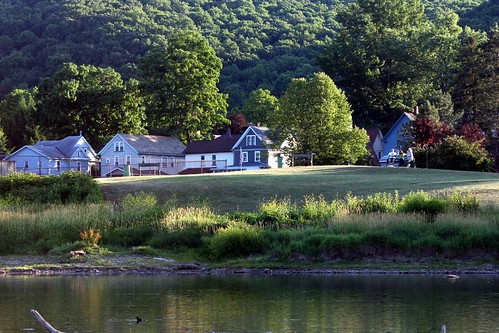
Riverfront Park


7.07.1, originally uploaded by palan57.

The blog posting function seems to clip the horizontal shots; let's see what happens to a vertical one.

Riverfront Park


7.07.8, originally uploaded by palan57.

Shooting from the middle of the Allegheny River at the mouth of French Creek.

Saturday, July 21, 2007

French Creek


7.07.14, originally uploaded by palan57.

Riverfront park in Franklin


7.07.30, originally uploaded by palan57.

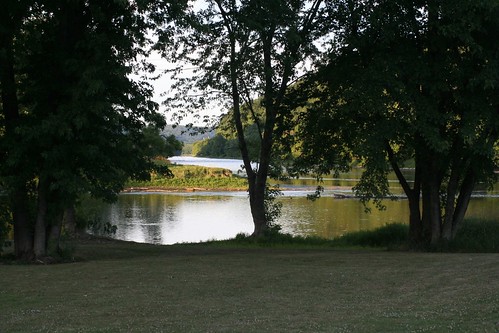
Woods and river


7.07.33, originally uploaded by palan57.

I've been doing some shooting around the area over the summer. Right now I'm trying out Flickr's blogging capabilities.

Thursday, July 19, 2007

OIL HERITAGE FESTIVAL

(News-Herald, July 19) It’s time for the premiere Venangoland summer festival—the Oil Heritage Festival in Oil City. If nothing else, this is an opportunity for all those people who whine “There’s nothing to do around here” to either put up or shut up.

Squeezing the festival down from a week to four days (with some bonus warm-up events beforehand) was a genius move because it has helped the festival achieve that all-important critical mass. As with Applefest, the festival does not require you to plan or organize to attend and enjoy. Pick a day. Drive to Oil City. Park the car, get out, and spend the rest of the day enjoying whatever you find.

The legendary fearfulness of navigation in Oil City is not an acceptable excuse. There is no place in Venangoland (outside of the new hospital) with more available parking. Once you’re on foot in Oil City, the dreaded maze of one-way streets is not a problem.

No doubt the News Derrick will be providing a complete listing of events; let me highlight some of the treats that I think merit a trip to Oil City this weekend.

There’s a lot of history in Oil City. The National Transit Building tours on Friday afternoon (5:30) are definitely worth a look, but the tours of the Latonia Theater tonight (6-8 pm) are the big history draw for me. I’ve heard that the owners are up to some exciting things in that too-long-neglected building, and it is way cool to have the chance to take a peek.

The raft race on Sunday from Henry’s Bend to Veteran’s Bridge is also mighty appealing. Prior info about the race says that it will be canceled in the event of bad storms or dangerously high water in the Allegheny. I’m going to go out on a limb and guess that the water level is not going to be a problem, though contestants should probably wear their river shoes for when they have to get out and push.

Fireworks are Sunday night. It’s not a party in Venangoland until Scott Cartwright blows something up (he should probably use that line in advertisements and on t-shirts).

And of course there’s the parade from noon till 2:00 on Saturday. The parade is always large, impressive, and well-run. And the same bizarre street layout that makes Oil City the scourge of little old lady drivers makes it a superb setting for a parade.

Those are the items on my own personal to-do list. But if that’s not your cup o’tea, another impressive feature of the weekend is the sheer variety of events. Skateboarding, weightlifting, a 5 K race, a fishing derby, and a softball tournament provide plenty for folks who want something a little more active than strolling and browsing. But there’s plenty of strolling and browsing, including the return of Pipeline Alley, a cute little side street from the past.

All of it is spread out enough to avoid the massive crammage of Applefest, but still compact enough that you don’t have to walk till you drop.

And the music! The organizers have outdone themselves this year with a steady diet of music that includes hired guns from outside the area and local favorites like Catro (really smooth and cool jazz), the reappearance of the much-beloved Southern Knights, and a Feroz Brothers reunion. Plus the various local groups that have been hired to accompany some of the other events and venues.

There’s something to listen to virtually all day every day. In an age where live music is a too-endangered creature, the Oil Festival Honchos are to be commended for providing a great setting for so many working musicians, and audiences will be fortunate to hear them.

One thing that always tickles me about small town life is our sense of distance. City folks will spend two hours in the car just to go out to eat and never bat an eye. Here in Venangoland, folks don’t like to spend fifteen minutes driving eight miles—it’s just “too far” to go to all that trouble.

Well, this weekend would be a great time to hitch up the horses and make the journey to Oil City. It’s a festival that has much to offer everyone, whether they live in The City or not. It is a credit to Oil City and all the folks who support her.

Not that I’m suggesting you should go because it’s your civic duty or you have an obligation to boost a Venangoland activity. You should go because it’s a chance to get out and have some fun and eat some food and see some folks. But hey—you can stay home if you like. Just don’t start whining about how there’s nothing around here to do.

Monday, July 16, 2007

RULES FOR MARRIAGE

(News-Herald, May 2003) I’m not sure why so many people are interested in other people’s marriages. I don’t think it’s just a small town thing, but we certainly do like to play the game.

Probably the most common version of the game is to compare a couple to the unofficial, but widely known, Rules for Marriage.

It’s never too early to start that game. Back in college I knew a man who had almost never dated and a woman who had just come off a multi-year intense relationship. They had been seeing each other a week or two, I recall, when they announced their engagement. We thought they were joking. Nobody gets married with such little preparation. As you’ve already guessed, the punch line of this story is that now, twenty-five years later, they are still happily married.

We are forever noting the Rules that have been broken in the pursuit of matrimonial bliss. Too much age difference. Too much income difference. Too soon. Too late. Too mushy. Not mushy enough.

Many of us cling to the Rules with an obsessive tunnel vision. We know dozens of exceptions to the Rules, and dozens of people who followed the Rules and failed anyway, yet we hold tight to the notion that the Rules must be followed for success.

In life, some rules are valuable. Some rules are on the order of “Don’t stick your tongue in a running fan.” They tell you how to avoid fairly predictable unpleasant consequences.

But other rules are about trying to create particular consequences, and these strike me as more suspect. “Keep your tongue out of the fan and you will become rich and famous” is half good rule, half groundless hope.

It’s nice to believe in rules, nice to believe that if you just do the right thing, you get the right results. It’s comforting. It’s liberating.

And it’s a great excuse to be lazy.

We like rules because they can substitute for judgment. Rich or poor, well-off or struggling, we deal with one constant in life—making choices is hard.

One of the most basic pieces of information that most of us long for is an answer to the question, “How am I doing?” Do I have a good job? Am I in a good relationship? Am I good parent, spouse, friend? Am I happy? Should I be happy?

These seem like easy questions, but for many folks they aren’t. It is hard for us to look at out lives and decide how they are doing, to decide if they are going well.

Particularly something as large and amorphous as a marriage. There are good parts and bad parts, days of joy and days of misery, and long periods in which folks just go through the motions without thinking much about it.

What’s easier than thinking about it is carrying around a checklist. If I am doing A, B, C, and D, then my marriage must be good and my spouse and I must be happy.

And perhaps that’s why people who break the rules can seem so threatening. If you’re breaking the rules, and it’s working for you, then how can I be sure that following the rules is working for me?

Perhaps marriage is more susceptible to this effect because so many of us continue to think that romance and love are magical events that happen to us. You wander through life, waiting for the moment when your “soul mate” appears and announces his/her presence. As long as they match all the checkpoints on the list, you can remain confident that True Love has happened to you.

Well, it’s nice to be idealistic, I guess. But then one day you have an argument or a disagreement or you just look at the person once shone like the sun and now they just give off the dull glow of a waning 40-watt bulb, and you check your list of rules and there are too many being broken. So you conclude that that itch of discontent must be the Truth of your situation, not a condition to be overcome by commitment and work, and you head out the door, waiting for the next Soul Mate to appear.

Well, even the Bible tells us that we’ll know good or bad by its fruits. In other words, it’s not a matter of going through the right steps, but a matter of where you end up. If you’re in a good place, it really doesn’t matter when people tell you that you can’t get there from here.

Friday, July 13, 2007


TEACHER MERIT PAY


(News-Herald, July 12)Teacher merit pay is back in the news. Some pilot programs in Minnesota, for example, have met with support from teachers, and look to expand.

This is a bit of a change. The NEA has always been opposed to merit pay, a position that we can add to the sixty gazillion somewhat boneheaded stances that the NEA has taken over the years.

Many teachers chafe at not being treated like professionals, but traditional teacher pay scales, based on years on the job alone, is not how professionals are paid. And for many teachers, what really chafes is the realization that they work twice as hard as some of their colleagues, for exactly the same pay.

For a merit pay system to work, two basic pitfalls have to be avoided.

First is the issue of measurement.

In any system where numbers are used to measure quality, it’s crucial that the numbers mean what you think they mean.

One of the weakest links in the PSSA system is the assumption that the high-stakes test given to all PA students shows how well-educated they are. It doesn’t. Student scores on the standardized test are an excellent measure of how the students do on a standardized test. What that has to do with actual knowledge, wisdom or education is open to debate, but I feel certain that student scores are not a reliable measure of their education or their teacher’s quality.

Much ado was made recently of a study showing a disconnect between a hospital’s cost and its mortality rate. Figures suggest that patients are more likely to die at more expensive hospitals. Or maybe not. You’re terribly terribly sick, and you want to make sure you get the best care possible. Do you check yourself into St. Ignatius of the Presitigiously High Pricetag, or Bob’s Community Discount Hospital?

The high-prestige, high-cost hospital attracts all the worst cases. The best way for it to improve its mortality rate? Find ways to turn away difficult, inclined-to-die patients. One of the predictable outcomes of school evaluations based on test is scores is to make pariahs out of poorly-testing students.

Are there other ways to measure teacher quality? If every school administrator was excellent, we could trust their judgment. But there are plenty of bad administrators who already find ways to take out their petty personal vendettas on particular teachers; giving these bozos the ability to control a teacher’s pay will only increase the carnage and give bad administrators the ability to drive every decent teacher out of the building. That doesn’t benefit anybody.

We could come up with a rubric, a clear-cut objective set of measures of teacher quality. Three problems here—one is that so much of the best teaching is not so clear cut, second is that the rubric has to be set to measure what you want it to measure, and the third is that administrators then have to follow the rubric and not just ignore it when it gives them an answer they don’t like.

A real, useful teacher evaluation and remediation program is the great missing link of the ed biz. It would take a lot of time and effort, but until then any “merit” will be awarded randomly, and there will be little to do with incompetent teachers except hope they’ll get the urge to retire quietly to Florida.

The other challenge with merit pay is, well, the pay part.

If you work somewhere that uses a bonus pay system, you know the problem. Sometimes bonuses are based on the individual job performance. Sometimes they’re based on the performance of the corporation as a whole. And sometimes bonuses are based on whether or not the company wants to spend money on bonuses.

No public school district in the country will ever find itself in a position to say, “Well, we cleared an extra 100 grand this year, so we’re going to hand it out as bonuses to the best teachers.”

Instead, it’s far more likely that school districts, strapped for cash and wishing to avoid a tax increase, will “discover” that nobody on staff “merits” the highest level of pay.

A poorly-constructed pay system based on merit becomes an easy way for a district to cut teacher pay arbitrarily. And if too many safeguards are locked in to avoid that scenario, the district could find itself with wildly fluctuating payroll costs that it can neither control nor predict.

Neither the problems of evaluation nor the problems of money are insurmountable, but the solutions require leadership, vision, time, and a whole lot of work.

Friday, July 06, 2007

VENANGOLAND RESOURCES

(News-Herald, July 5) I was reflecting once again on the benefits of living in Venangoland, standing ankle deep in the waters of French Creek, right above the point where they empty into the Allegheny. The evening sun was angling in to illuminate 143 different shades of green, and every direction I turned, the view was beautiful.

Families of geese angling in across the water. A father teaching his daughter to skip stones from the edge of the park. Flashes of red and yellow as cyclers worked their way up the bike trail.

It is easy to take so many of the resources around us for granted, to imagine that we enjoy all of these things for free. But I’m inclined to believe that anything worth having is worth paying for.

I’ve written about the bike trail before. I think it is one of the great treasures of the region.

I have no doubt that it brings people in from outside the region. It’s certainly not Disneyland or a giant casino; it will never be a great driving engine of tourism. But it does bring a slow steady trickle of people here to visit, buy some food, envy us our beautiful river and woods.

But if the bike trail never brought a single soul into Venangoland, it would still be a local treasure for what it contributes to quality of life. It gives each of us a chance to walk or run or pedal our way through long stretches of natural beauty the likes of which millions of Americans will never ever see.

I know there are some people who are violently, vehemently opposed to the trail, and while I try to see most sides of an issue, I can’t really see theirs. The people who have blocked the trail’s progress through some areas have put petty selfishness ahead of the good of the community. The people who continue to subject the trail to petty harassment need to crawl back into their caves and get over themselves.

The trail is an enormous asset to the region and deserves appreciation and support, and it’s an asset that’s provided to us without ever an admissions charge. We get to use it for free.

Not all our assets are outdoors. We just finished up the run of Sweet Charity at the Barrow-Civic Theatre, and afterwards dozens of people have stopped me to tell me how great it was to see such an outstanding amateur production in such a great space.

The Barrow is just about to turn fifteen. It showcases local talent and a wide variety of professional acts that our region would be hard-pressed to book without such a showplace to put them.

But a regional theater like the Barrow is a hard resource to maintain. Management has to balance what it actually costs to run the place against what people in this market are willing and able to pay for a theater ticket. Theaters like the Barrow live forever on the edge of financial disaster, even as people go on about how great it is to have such a place here.

The list goes on and on—there are libraries in Venangoland, including the Oil City library that was built as a Carnegie library. A Carnegie library!! The country is filled with cities, much bigger cities, that fought to have a Carnegie library and were bitterly disappointed to fail.

We’ve had a chance this summer to experience the loss of one of those take-it-for-granted resources. Hopefully, once the smoke clears and all the children are done throwing hissy fits at each other, someone will figure out how to restore the use of Two Mile Run County (or Not) Park. But in the meantime, there’s not much the rest of us can do.

But for everything else, we have power. It’s the power to put our money where our mouths are. If you think it would be tragic, a major loss, for DeBence Music World or the Venango Museum of Arts & Science to have to close up shop, write them a check. If you regularly use the bike trail, show your appreciation by sending them some money.

If something’s worth having, it’s worth paying for. Do your part, however large or small, to preserve the better parts of life in Venangoland. Look—I’ll even give you some addresses:

Allegheny Valley Trails Association
Box 264
Franklin, PA 16323

Barrow Civic Theatre
1223 Liberty Street
Franklin, PA 16323

You can find more in the phone book. Go ahead and put your money where your heart is.

Tuesday, July 03, 2007

BULLY HILL BRASS IN CONCERT

This Thursday night the Bully Hill Brass Band will be appearing at the South Park band stand. It will be a concert of traditional dixieland jazz, free and open to the public.

The band includes Dave Greene, Fred Frye, Ed Frye and Kristen Criado. Oh, and me. Drumming this time will be Nate Frye, and Suzi Ditzenberger will be guest vocalist for the shindig.

We've been around for years-- you might have caught us last spring as the house band for the Barrow-Civic production of A Night at Big Daddy's. Our repertoire runs from period pop pieces like "After You've Gone," "Five Foot Two" and "Ain't She Sweet" to jazz standards such as "That's A Plenty" and "Wolverine Blues."

We have a lot of fun, and we don't take things too seriously. We hope you will join us-- it will be a good time. And there will be popcorn for sale, too...

Sunday, July 01, 2007

DO THE RIGHT THING


(News-Herald, September 2002)This originally saw the light of day back when contract talks between the school district and the teachers union, of which I was the president, had pretty much ground to a halt. Within a month we were going to be on strike. It was a tough period for writing this column, because I didn't think I could follow my usual approach and simply write about what was on my mind. A little more thought and I found my way around that obstacle...


I am an optimist in some things. For instance, I believe that the vast majority of people always try to do the right thing.

I have known just a handful of what I think of as Bad People, people who knew right from wrong and chose purposefully, deliberately, to do the wrong thing. But almost every person I’ve ever known, I believe, was a person trying to do what, in their own mind, was right. Even the people that I really disagreed with.

Not that Doing the Right Thing is always easy. First you have to settle on what the right thing is, and that can be a good deal of hard work, hard enough that many of us, in our laziest hours, will look for a shortcut. We’ll find an expert to tell us, some authority figure who will do us the favor of telling us what answer is correct, what course is the right one. We’ll sort people into two groups—people who we always agree with and people we think will always be wrong—and then we don’t ever have to actually think about what anyone is saying ever again.

Of course, I’ve never known anyone who was either right or wrong 100% of the time.

But even as people take the lazier route and avoid thinking through the matter of right and wrong in a situation, I still believe they are trying to do what they think is right.

That probably seems like one of the less profound observations that I’ve ever made here, but I think it’s pretty commonly overlooked.

I think it’s more common to believe that those who are taking a position opposite our own are doing so because they are evil or stupid or out to get us, and that mistaken belief makes communication break down in some critical ways.

First, we stop listening. After all, why listen to evil, stupid people who are out to get us? However, my own observation over the years is that if someone has something important to tell me, and they don’t think I’m listening when they just talk, they will scream instead.

Second, we stop talking. After all, why try to explain yourself to evil, stupid people who are out to get you? Unfortunately, the chances that they will understand my concerns and my intentions when I’m not trying to explain myself are slim indeed.

So if other people really are trying to do the right thing, how can their right thing be so different from mine?

Sometimes it’s a matter of different values. For instance, America continues to have trouble finding a common view with some other cultures because we value an individual human life so much more than they do.

Often that differing value system extends to disagreements about The Right Thing itself. This is one of the hardest things about parenting. Virtually every major argument that I’ve ever had with my children (particularly since puberty) has not really been about what The Right Thing is—it has been about whether my idea of The Right Thing would prevail or not.

I have done extensive field research with my children. I have, on so many occasions that I’m ashamed to count them, stopped thinking of them as rational, reasonable human beings who wanted to do what was right as they saw it, and instead viewed them as willfully obtuse, wrongheaded little children who needed to be made to see things my way (AKA “the right way”).

I could say that I was perfectly happy to discuss the matter at hand with them, but what I really meant was that I’d be happy to talk to them just as soon as they acknowledged that I was standing up for what was right and they were being bullheaded for no good reason.

What I have had to learn, and relearn, is that as soon as I could unclench long enough to recognize that they were trying to do what was right as best they could see it, my house stopped feeling like a battlefield. At that point the real search for a Right Way that we could both live with could begin.

Believing that other people want to do the right thing doesn’t cost you a bit. You can still stand up for the right thing, as you see it, just as forcefully as you need to.

In fact, the third mistake is to think that since you’re stupid, evil, and out to get me, I had better not stand up for anything, but just try either to obliterate you or, failing that, pay any price for peace. My mistake here is to think that you are all of the problem, instead of part of the solution.

Friday, June 29, 2007

POST-NATIONALISM

(News-Herald, June 28) I want to start with a short history lesson. Please bear with me.

Up until the 19th century, nationalism was not much of an issue in the world. People’s allegiances were to family first, then maybe community or tribe. The king was just some guy who, hopefully, would leave you alone. “The king is dead; long live the king” didn’t so much mean “Hooray for us” as “Meet the new boss, same as the old boss.”

In the 19th century, several leaders discovered the value of nationalism as a motivational tool, building it up until we arrived at “modern” wars like World War I, where people were successfully motivated to fight and kill and die for The Motherland.

As a relatively modern nation composed almost entirely of non-natives, the US has always had a bit of the nationalism bug—though the Constitution was a tough sell because most folks at the time considered their primarily allegiance to be to their state. But we’re used to the notion of national pride, national honor, national interest. It seems natural and normal to us, but it’s not the way Things Have Always Been.

Now, I wonder if we aren’t seeing a change into a post-national world. And these days it’s clearly visible in two ways: terrorists and corporations.

Lebanon is an example of a place where government and nation are in danger of being overwhelmed. It’s just one of many locales on the globe where terrorists live, or at least occupy the space, with no particular allegiance to or stake in the actual nation.

The Taliban have always been an effective enemy to pretty much anyone who wandered into Afghanistan because they show no particular interest in actually taking over the country. Terrorists don’t want to rule, don’t want to waste their time on the mundane business of government like maintaining roads and services. They just want to be able to do as they please and take what they want.

Likewise, modern multinational corporations operate in a world that is above and beyond nations. These days, nobody would expect a CEO to announce that he was making a corporate decision based on loyalty to the nation that he calls home.

We occasionally get some noise about how global economic stuff will ultimately be good for America, but nobody really knows how that will pan out, and, really, it’s a justification after the fact, not a motivation for decisions. There seems to be an unstated assumption that governments are an obstacle to economics.

Terrorists threaten governments with guns and bombs while corporations buy them with money. Both are looking for the freedom to exert their will without being restrained.

I have no idea if life in a world without national allegiances is a Good Thing or a Bad Thing. Nationalism had its good points, but it has also motivated people to do many awful things. I suspect the post-nationalism is neither good nor bad—it just is. It will be a benefit for some people, a curse for others. It will lead some people to do good things, and others to do terrible things.

But a post-national world will be one that involves new roles for governments. Terrorists and corporations want pretty much the same thing from governments—to be left alone and allowed to pursue their interests with a minimum of interference.

That requires some sort of cooperation with the government, because while interference sometimes comes in the form of laws and legislation, sometimes it comes in the form of angry citizens carrying pointy sticks. Corporations cooperate by paying some attention to citizen interests. Terrorists cooperate by agreeing to not blow up too many important people too often. Both have learned to cooperate by providing some of the goods and services that governments traditionally take care of.

The big difference between these new rulers and governments is that citizens don’t get to elect the CEO of Satan-Mart or the leader of Titanic Whackos Instigating Terror.

That’s what may make bad news for the rest of us. First, because we don’t easily wield the power to make these guys go away. And second, because governments are torn between serving the citizens who elect them, the bomb-wielding whackos who threaten them, and the corporations who pay them. My hope? That government will remember that their job is to protect those of us who think of ourselves as citizens from all those other folks who don’t.

From my Flickr